
Recent films add gimmick, sacrifice creative vision
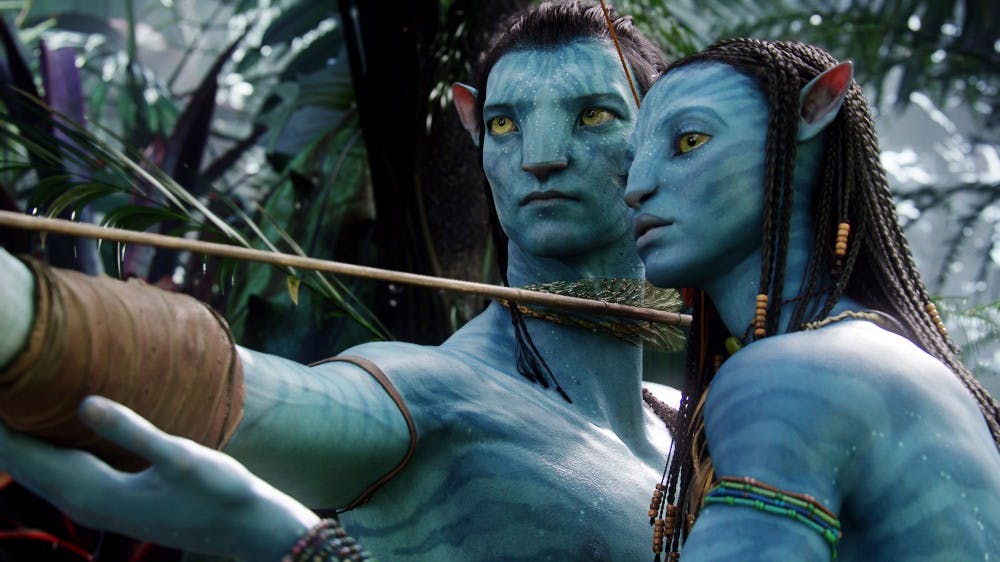
An epidemic of lazy filmmaking has swept over Hollywood in the last few years post-”Avatar.”
James Cameron shot his epic 2009 film in 3-D and showed the world what was possible with the medium. The film ended up being the highest-grossing film of all time.
In an attempt to cash in on the success of “Avatar,” Hollywood has been releasing more 3-D films. The major problem is that many of these films are shot in the standard 2-D format but digitally transfigured into 3-D. I refuse to pay three dollars more to see a film retrofitted in 3-D when the filmmakers couldn’t spend the time and money to actually shoot it that way.
A film will often hog two or more screens at a multiplex because it is being projected in both 2-D and 3-D. If a director shoots a film in 3-D — such as Ang Lee with “Life of Pi” or Martin Scorsese with “Hugo” — I am more than willing to experience the film the way the filmmakers intended it to be seen.
3-D, like computer generated imagery,or CGI, is being used far too often and sloppily, but it is just a tool. Used sparingly and artistically, it can result in glorious visions.
Hollywood has become more and more like a factory, churning out corporate-manufactured products for mass consumption. 3-D is a surcharge that isn’t worth the money unless the product is genuine.
Retrofitting a film in the present is bad enough, but Hollywood has sunk even lower. This Friday, the 1939 classic “The Wizard of Oz” is being rereleased in theaters, only this time in IMAX 3-D. A whole new generation will be exposed to a bastardization of this timeless masterpiece.
Victor Fleming’s original film was carefully crafted by many artists — the director, cinematographer, set designers, lighting technicians — to look a certain way in 2-D. To alter the work is to disregard and disrespect the original intent of the artists. It is a form of artistic vandalism.
While retrofitting a film in 3-D is not as egregious as colorizing a film — adding color to black-and-white films — it is still inexcusable.
When James Cameron released a retrofitted 3-D version of his film “Titanic,” the second highest grossing film of all time, he absolutely had the right. Unless the original director gives permission, no changes should ever be made to a film.
An exception is if a director is deeply involved with and oversees the 3-D retrofitting of the film. Then, the conversion is fair game.
I cannot wait to see Alfonso Cuarón’s sci-fi film “Gravity,” especially in IMAX. That means I have to see it in retrofitted 3-D, though.
The film uses state-of-the art special effects, and Cuarón said that “because of the technology … it was practically impossible” to shoot in 3-D. He said the conversion started “three and a half years ago, to go through pains to make sure that it was the closest thing to native 3-D.”
If filmmakers like Cuarón have an artistic reason for retrofitting a film in post production, I say the decision is valid. I always prefer that a film be actually shot in 3-D, but I want to see it the way the filmmaker intends it to be seen.
Most post-production conversions are nothing more than shameless cash grabs and are not done for artistic reasons. I want 3-D to mean what it stands for: 3 dimensions.
It can transport the spectator visually into a new world through technology. I don’t want it to only stand for “three dollars.”
More Like This
One Star Wednesday: 'The Last Airbender'
By Joseph Glass | Nov. 10, 2015'One of the best science-fiction films of all time'
By Jonathan Winchell | Oct. 7, 2013