
Through the last couple of years, college athletics have continued to change and grow in so many different ways. The newest change involves revenue-sharing privacy and is now being addressed at the federal level rather than state level, as called for by South Carolina Gov. Henry McMaster.
In June 2025, the House v. NCAA settlement was approved and implemented on July 1, 2025. The settlement allowed for college athletics programs to directly compensate student-athletes for their Name, Image and Likeness.
Schools were allotted a set cap of $20.5 million, which is expected to increase by about 4% each year, ending at an estimated $32.9 million in 2034-35, according to the National Conference of State Legislatures.
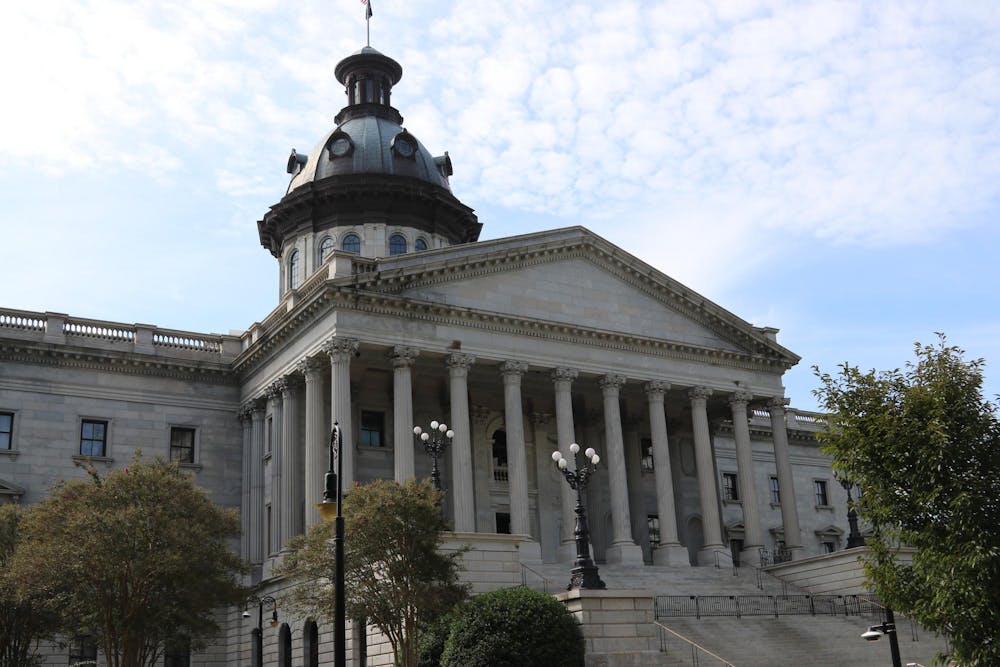
Bill H. 4902 was introduced in the South Carolina State House on Jan. 14 and would allow public state schools to classify the money they pay student-athletes under revenue-sharing contracts as private.
This idea was controversial because most other school or public information is accessible under the Freedom of Information Act, yet this would be an exception. Athletic directors provided statements in person in front of the Senate Education Committee on Feb. 25.
Another key note in the bill’s summary is that public institutions are subject to the South Carolina Freedom of Information Act, which allows any person to request access to records from federal agencies in which the agencies must disclose said information.
The schools’ revenue-sharing programs would have an exception from disclosing individual athletes' payments, sport-specific allocations and negotiation records.
Intent of the Bill
Part of reasoning for H.4902 is to maintain universal competition against surrounding schools. During questioning, Sen. Shane Massey asked a hypothetical question to USC athletic director Jeremiah Donati to help get clarity of the situation.
"If Alabama knows that you're spending $17 million on football, how does that hurt you?" Massey said.
"Because Alabama would spend $17.1 million," Donati said.
Both Clemson athletic director Graham Neff and Coastal Carolina athletic director Chance Miller agreed with that statement and had their own takes on similar experiences.
Miller provided a statement, which caught the attention of the members of the Senate Education Committee. According to Miller, in regard to football in the Sun Belt Conference, not a single first, second or third team all-conference player remained on their team the next year.
He also said that transparency is nice, but he can guarantee that schools will lose their student-athletes once the numbers are published to their competitors from other states.
Coastal Carolina uses its donations and sponsorship money towards revenue-sharing expenditures, while Clemson uses separate and distinct expenditure accounts where the revenue-shared payments are processed.
South Carolina pays the revenue-sharing by using the money directly from conference distributions, which is primarily Southeastern Conference media rights with more to spare.
Concerns with bill lead to McMaster’s veto
While the selected athletic directors can say it's not state money, lots of other legislators don’t believe that statement with full proof.
“I think those who might contend that this should be able to be FOIA'd would say state-appropriated money is involved," Sen. Richard Cash said. "So y’all state, 'No, there is not state-appointed money involved. The institutional support comes from tuition.' Well, at the most basic level, money is fungible.”
Cash even brought the idea of opposing schools calling the selected players' agents to see how much money they are making. His inquiry went unanswered by the athletic directors.
In its reading before passing in the House of Representatives, Rep. Chris Hart had questions about its ability to be FOIA'd in contrasting issues, though voting for it in the end result.
Jay Bender, attorney with the South Carolina Press Association, expressed concerns with the rushed legislative process, which he said breaks public trust. Bender also said the repeated claims of competitive disadvantage could be a cover for redirecting funds to other uses, pointing to the example of James "Jim" Holderman.
“The University of South Carolina last year in 2025, they raised $260 million from private donors, and that is FOIA-able, so why are we going to carve out an exception just for the NIL?” Hart said.
In McMaster’s veto message, he acknowledged both sides of the argument when vetoing the bill on March 11.
“This legislation presents a conflict between serious concerns and a clear principle,” McMaster said in his veto message. "On the one hand are privacy rights of student-athletes and the competitive interests of our State's collegiate athletic teams. On the other hand is the right of the People to know how public funds are being spent. Both sides offer compelling considerations.”
While acknowledging wording used to explain the current state of college athletics in several statements as “Wild West” and “shambles,” McMaster also asked for help at the national level.
“Given the NCAA's lack of moral authority, the federal government may be necessary to help resolve this crisis," McMaster said in his veto message. "President (Donald) Trump is already hosting discussions at the White House to find solutions.”
Trump has hosted one of college football’s most prominent retired coaches, Nick Saban, at the White House to help guide college athletics talks, in which the president stated that he plans to issue another executive order for college athletics.
If the South Carolina General Assembly brings McMaster a new reformed bill, South Carolina will be the only state to have this lack of transparency. Donati said in part of his statement that communication gets lost between all the factors, but he is not ready to be the first state to take this step.
“If everyone were doing it, yes," Donati said. “As my colleague, Mr. Neff, pointed out, a big challenge we have in our business right now is the lack of transparency. As we are dealing with athletes' agents, there’s a tremendous amount of bad information out there. We see abuse or breach of fiduciary duties to these young men and women.”
The future of Name, Image and Likeness remains uncertain, with schools, legislators and media unsure if this was the right or wrong decision until we see some guidance or issues in the future.