
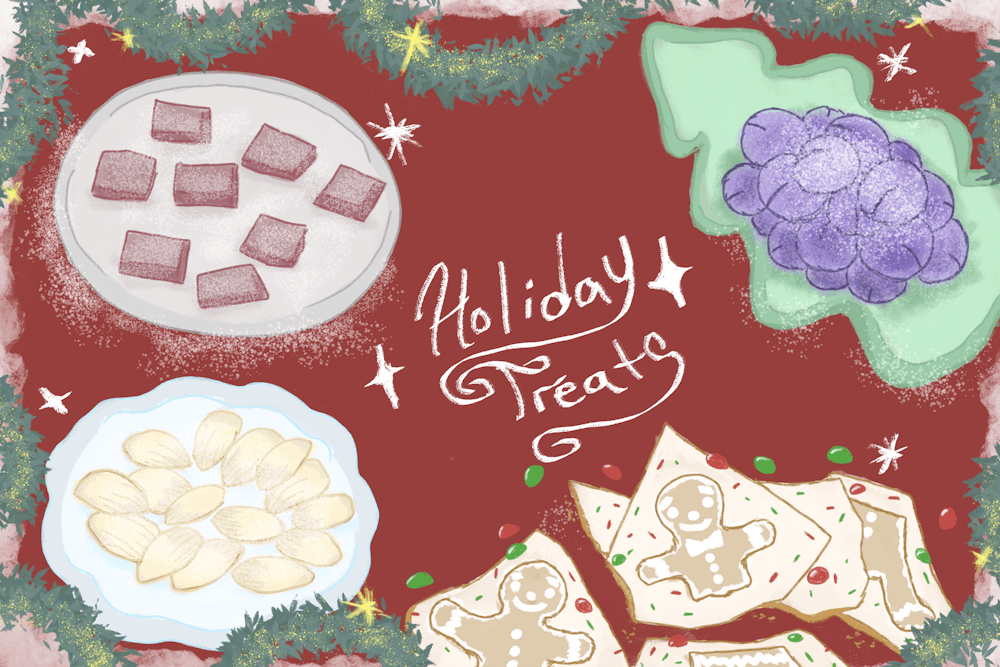
When winter arrives and greenery becomes limited, holiday bakers get creative. They transform preserved fruits, strong spices and flavors into some of the season's most magical sweets.
Holiday fruit traditions vary across cultures, ranging from citrus sweets in Italy to spiced dried fruit treats in Northern Europe. Together, they show how each location finds a unique way to brighten the winter season.
Cranberry pâte de fruit
Cut into cubes and coated with sugar, these small treats represent the centuries-old French tradition of storing fruit for the winter. Their sweet taste and sugary finish made them a Christmas-table staple long before the advent of modern candy making.
Cranberry pâte de fruit is bright, tart and vivid red, making it look like an edible holiday decoration. Its mosaic-like transparency makes it interesting on dessert platters.
The cranberries' natural gelatin gives the candy a firm, bouncy structure, and the tartness balances the sweetness in a way that keeps people coming back for more.
Eggnog madeleines
For those who enjoy the flavor of holiday eggnog, these eggnog madeleines provide a similar taste in a lighter, French-inspired snack. Madeleines, a curved pastry made with spiced batter, originated in the 18th century and is now a classic European dessert.
The thin crumb soaks up the eggnog's custard-like flavoring, resulting in a festive flavor without the drink's heavy finish. For decades, home bakers have adapted the basic sponge, typically changing the spices to reflect local holiday traditions.
They look great on breakfast tables or in gift boxes when dusted with powdered sugar. Madeleines were originally treasured as little, shared delicacies in French cafes and take different forms today.
Chocolate peppermint crinkle cookies
Chocolate peppermint crinkle cookies don't use fruit, but peppermint takes center stage as a strong, seasonal flavor. Since the early 20th century, these cookies have been a holiday staple in the United States due to their rich chocolate and crisp, refreshing peppermint flavor.
The dough's fudge-like texture contrasts with the powdered sugar covering, which splits during baking to give its unique snow-dusted appearance. The cookies' appearance contributes to their popularity at Christmas cookie exchanges, as they can make the table festive.
The cookies are soft, chewy and have a light mint flavor, balancing chocolate's warmth with peppermint's strong overtones. Their popularity shows how simple seasonal flavor can turn an everyday treat into a holiday tradition.
Struffoli
Struffoli, a Neapolitan Christmas staple, are small fried dough balls coated in warm honey and often flavored with orange or lemon zest. The dessert dates back to the 17th century, when Italian bakers formed honeyed dough into little balls to represent fortune and festivity.
The candied citrus brightens the dark honey glaze, giving the tiny treats a vibrant, fruity flavor that balances their sweetness. Each bite contains the warm, delicate flavors of Italian festive spices.
Struffoli, whether served in the shape of a wreath or a mound, is crisp on the outside and soft on the inside. Their festive shape and colorful sprinkles have made them a staple of Southern Italian Christmas tables for years.
Sugar plums
Sugar plums are not plums; instead, they are a combination of dried fruits and nuts folded into sweet, flavorful balls. The treat dates back to 16th-century Europe, when sugar and dried fruits were considered luxury ingredients kept for special occasions.
Traditional recipes sometimes pair figs, dates or prunes with warming spices such as cinnamon, cardamom and clove to add more spice. These treats were popular due to their long shelf life and ability to enhance winter celebrations.
Sugar plums, dusted with sugar or delicately coated in honey, became a holiday gift and winter staple. Their rich, spicy quality still captures a traditional Christmas charm.
Gingerbread cookie bark
Gingerbread cookie bark turns classic cookies into a simple, holiday-appropriate treat. Its origins can be linked to medieval Europe, where ginger, honey and spices were used in baked products that could be cut into shapes or broken into pieces.
The cookies are baked thin, sometimes covered with chocolate, and then broken into random shards for a casual, festive appearance. Sprinkles, drizzled icing or nuts give color and texture to the bark, making it both visually appealing and tasty.
Gingerbread bark, with its warm bite of ginger and cinnamon, captures the traditional holiday flavors in a convenient package. It has become a modern Christmas classic, combining centuries-old recipes with modern presentation.
Whether vibrant in color, fruity, or spice-packed, these Christmas fruits and seasonal desserts show that adding holiday flavor does not have to be difficult. Sometimes the season's most memorable meals come from the simplest ingredients and the traditions that keep them going year after year.