
Mitra Kavandi was drawn to the University of South Carolina for its opportunities of growth offered to students. Now, Kavandi is in her second year as a ceramics graduate student in the School of Visual Arts and Design, pursuing those opportunities she did not have in her home country of Iran.
"The U.S. gave me the opportunity to study in a space where I could connect philosophy, psychology, and ceramics — the three fields that I’m most passionate about," Kavandi said.
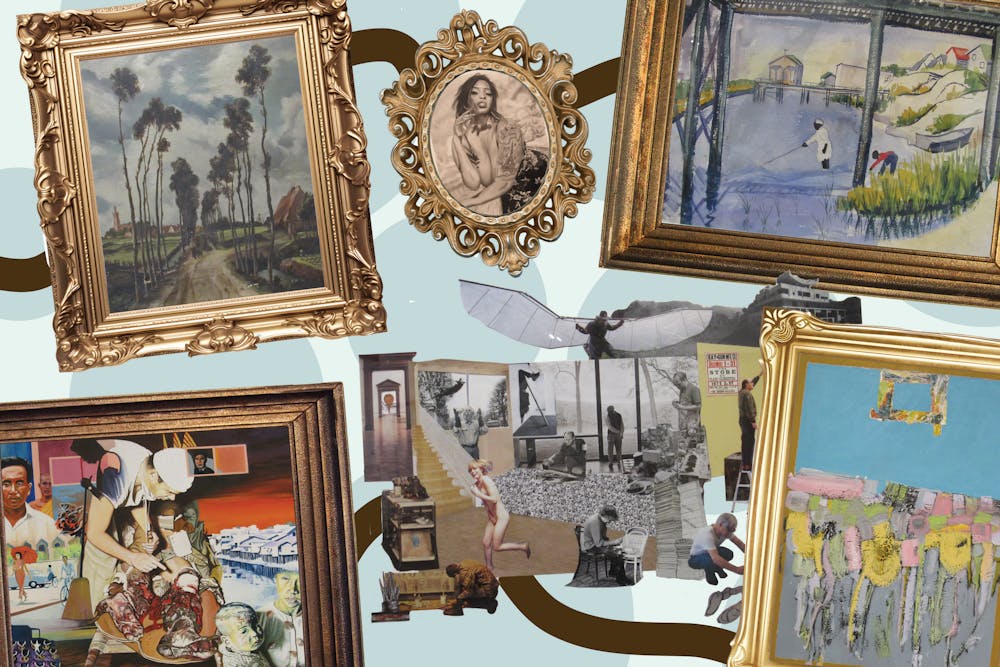
She and other students share the same goal: collaborating to create and design the "Generations" exhibition, located at McKissick Museum. It celebrates the 100th anniversary of SVAD and isdesigned entirely by students. The exhibition is divided into five generations, spanning from 1925 to present day.
The exhibition is part of a museum management graduate program taught by McKissick Museum Director Lana Burgess. Students use and discuss archives and resources to distinguish which pieces are most important to the school's history. A media arts panel is also included at the end of the exhibition, featuring music videos and short films from current students and alumni.
The process and research
Susan Felleman, an art history and film and media studies professor, and Burgess laid the framework and materials for students by providing the access to various South Carolina archives. The resources included accounts and records from the South Caroliniana Library, the South Carolina State Museum and the McKissick Museum.
"A lot of it was already digitized, and so we provided that content," Burgess said. "But it still involved students doing text searches, looking for specific names and then trying to piece together who the major players were, what the time frames were for the different decades, or in this case, every 25 years of the department."
Students also had direct access to paintings, sculptures and digital art. These works provide fresh interpretations and place each piece within the university’s broader context.
Third-year art history student Agostina Mercado said students were divided into numerous task groups by generation and skills, including design and public relations and marketing. She was part of the research and writing team.
The PR and marketing team focused on creating materials to send out around the university and create traffic for visitor reach. The design team focused on the layout of the exhibition.Mercado said it is designed so that visitors can go in any sequence, which makes for a dynamic experience.
"Everyone enters a room differently and turns in a different way," Mercado said. "Some of the sculptural works were placed in such a way that they would relate to works that were hanging. So, if you stand in a certain way, and you look at one sculptural work, just behind it, you see another, and they relate in a way."
The students had the opportunity to speak with artists included in the exhibition to get their direct perspective, Kavandi said. All artists in the exhibition have relations with USC, as they include faculty or staff members, former students, alumni or current students.
Kavandi did a video interview with USC alum Clark Ellefson while he was in his art studio. Kavandi said she left the call feeling inspired toward her art and enjoys speaking with artists in the field to get their perspectives. Ultimately, the conversations helped her understand cultural diversity on a deeper level, she said.
"As an international student, I learned to see my identity from new angles," Kavandi said. "Even though it's challenging, can also be a great source of creativity — because it pushes you to redefine who you are and how you express yourself through your work."
Ellefson received his bachelor's degree from USC in 1974 and is the principal designer and co-owner of Lewis+Clark, a local furniture company established in 1980.
Burgess and Kavandi both said each artist and piece in the exhibition is very unique and based on their educational and life experiences. As an artist herself, Kavandi said she can relate to the emotions and experiences artists face despite cultural differences.
"The most interesting part for me was seeing how each artist approached the same theme in such different ways," Kavandi said. "This exhibition made me think more deeply about how my works can communicate ideas of identity and presence."
Mercado said the experience was satisfying for her to look through physical history that many don't have access to.

"That kind of research is one that computers can't do still," Mercado said. "I personally found it really rewarding, going to the Caroliniana Library and going through those archives that were pieces of writing, letters, in some cases, that belong to other people in the past."
The archives featured biographical materials and output from the university, such as newsletters and news about past events on campus.
The goal of displaying the archives and sourcing was to cast a wide net of material and display that to the visitors, suggesting the school's extensive past, Mercado said.
Looking back on the school's past also brings a sense of nostalgia to potential visitors from each generation, reflecting on their individual impacts on the school's progression, Mercado said.
"We wanted visitors who, especially those who are part of the university, who are students of the School of Visual Art and Design now to maybe see themselves reflected in the work," Mercado said. "To see maybe the influences that the culture of the art department has had on their work, and to sort of ask themselves ... 'Where does my work fit into this legacy, this 100-year legacy?"
Notable figures
The exhibition features work by several influential local and national artists connected to South Carolina who have shaped the school’s history and the broader art industry. Katherine Heyward was the first woman to be hired as a faculty member in the school's history. She was also the first chair of the art department in school history.
Although there is not much information about her specific works, Heyward and her estate donated the "Heyward Album" to the South Caroliniana Library. The album consists of Civil War-era figures in South Carolina and unidentified members of Heyward's family. Her work is featured in the school's yearbook, which was originally Garnet and Black, the current magazine for the university.
Tarleton Blackwell, 69, is a Benedict College and USC graduate from Manning, South Carolina. His style incorporates various forms of symbolism in the South, children's tales and folklore, stereotypes and imagery to create his unique paintings. The imagery forces the viewer to break down its meaning.
Blackwell has been an art instructor across South Carolina, including Florence School District Two, Williamsburg County Schools, South Carolina State University and the Columbia Museum of Art. He currently is the art instructor at Scott's Branch High School in Summerton, South Carolina.

The lasting effect on students
Kavandi said the exhibition not only shows the collaborative effort from the group of students, but also the ability to see the similarities and differences in artistic process from then to now.Kavandi said the experience inspired her to reflect on the future and the lasting impact of her work.
"It was really impressive because you could literally see history in front of your eyes," Kavandi said. "The history of artists, their lived experiences, emotions, thoughts, and how their perspectives on life appear through their artworks. Seeing people with completely different lives and emotions presented side by side was really powerful."
"Generations" is open for free public view at McKissick Museum until Dec. 6.