
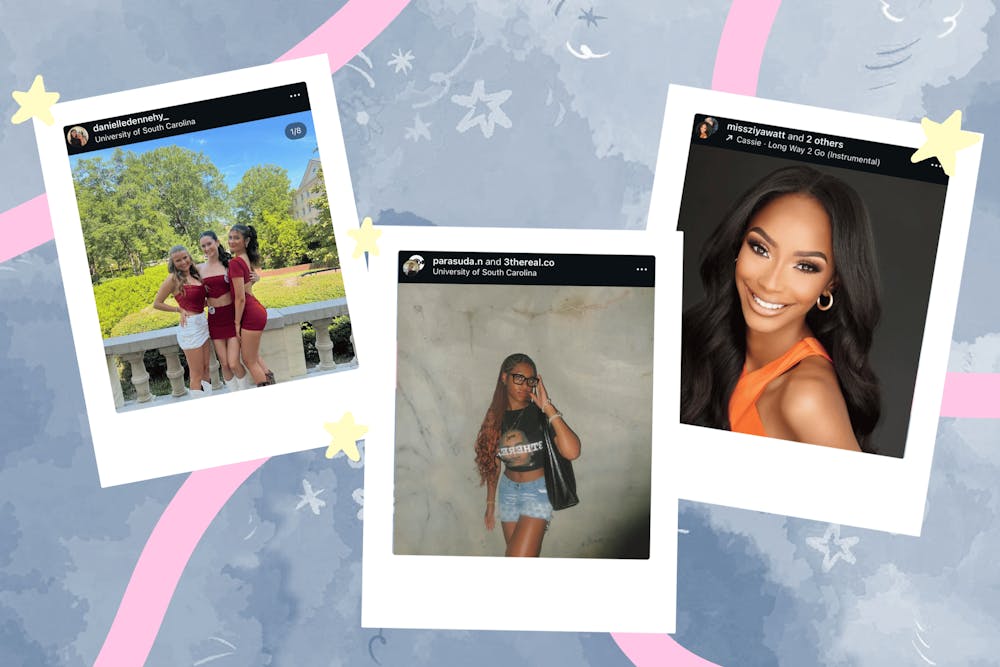
When a student approached second-year biological sciences student Danielle Dennehy and told her that she chose the University of South Carolina because of her TikTok videos, her perspective on social media changed.
Dennehy began posting “day-in-my-life” videos before arriving on campus, after noticing a lack of student-created content about USC. What started as casual posting quickly became more intentional.
Before that moment, Dennehy viewed posting as just a way to share a glimpse of her college life. But hearing that her content influenced someone's college decision made her reconsider the impact of what she was creating.
"I think it became real for me when I was out and a girl came up to me, and she was like, 'Oh, I chose USC because of you,'" Dennehy said. "That's when I had a moment, and I was like, 'Wait, maybe I am making a difference.'"
Dennehy's perspective shifted further after landing her first paid brand partnership.
“(Starry) paid me almost $2,000 for three TikTok videos ... and I only have about 3,000 followers,” Dennehy said. “It showed me you don’t have to be a huge creator to have opportunities.”
For many college students, content creation has evolved from entertainment into a legitimate side hustle.
Jayla Byers, a second-year biological sciences student, said getting paid has been a rewarding aspect of posting content.
“Especially as a college student, when you can get paid for content you’re already making on a regular daily basis, it’s really rewarding,” Byers said.
Unlike traditional influencers who rely on millions of followers, many college creators operate as micro-influencers, who are typically under 10,000 followers, allowing them to focus on authenticity over scale since it tends to sell more.
As more students enter the influencer space, Byers said standing out requires more than simply following trends.
“I would definitely say being yourself, that definitely has helped me,” Byers said. “I think a lot of people, they start getting into content and copy what other people are doing, but I feel like you need to have your own style and own personality.”
Javion Hill, a third-year sports management and entertainment student, said consistency helped him grow his TikTok presence.
One video has almost a million views, he said. The video featured Hill recreating a trending Deion Sanders dance with a humorous caption. He said the viral moment increased engagement and traffic to his page.
“That video definitely got my foot in the door when it comes to being more motivated to post” Hill said.
Hill said his goal is to reach 10,000 followers to qualify for TikTok monetization. He said that, regardless of money, content creation should remain enjoyable.
“Definitely don’t treat it like a job,” Hill said. “Have fun with it.”
For some students, influencing is less about going viral and more about professional development.
Ziya Watt, a first-year broadcast journalism student, said content creation can serve as a stepping stone toward future careers.
“Sometimes you have to create opportunities for yourself, especially if you're a freshman or a sophomore,” Watt said. "I think that creating those opportunities for yourself and fostering those relationships can really help you kind of help other teens as well."
Jordan Ford, a first-year public relations student, said college-related videos tend to perform best on her page and resonate with her audience.
Ford said she views TikTok as a potential pathway into working professionally in social media and has seen it happen in real time.
As social media platforms expand, influencing among college students continues to grow.
“It’s definitely a growing population within the social media world,” Hill said.
According to a 2026 World Metrics report, Gen Z influencers ages 18-24 have a 28% higher engagement rate than millennials. The report also found that 30% of influencers hold a college degree, while 45% have some college education, highlighting the growing connection between higher education and influencer culture.
However, Dennehy said that higher engagement does not guarantee long-term success if it is not consistent.
“You’re not going to see any growth if you stop posting,” Dennehy said.
Byers said visibility and opportunity do not always feel equal for all student creators.
As a Black content creator at a predominantly white institution, Byers said representation can affect who gets noticed and selected for brand partnerships. During a campus Uber campaign, Byers said she noticed limited representation among selected ambassadors.
Byers said that out of all 12 ambassadors, she and her friend were the only two Black ambassadors, and she said there are other Black college content creators at USC that definitely could have gotten the gig.
Byers said conversations about awareness and access are important as influencing continues to grow across campus.
Despite a long list of priorities, whether it be monetization, career preparation or creative expression, Dennehy said authenticity sticks out as most important.
“You don’t want to look back and say, ‘I wish I did this,’” Dennehy said. “Don’t be afraid to put yourself out there.”