
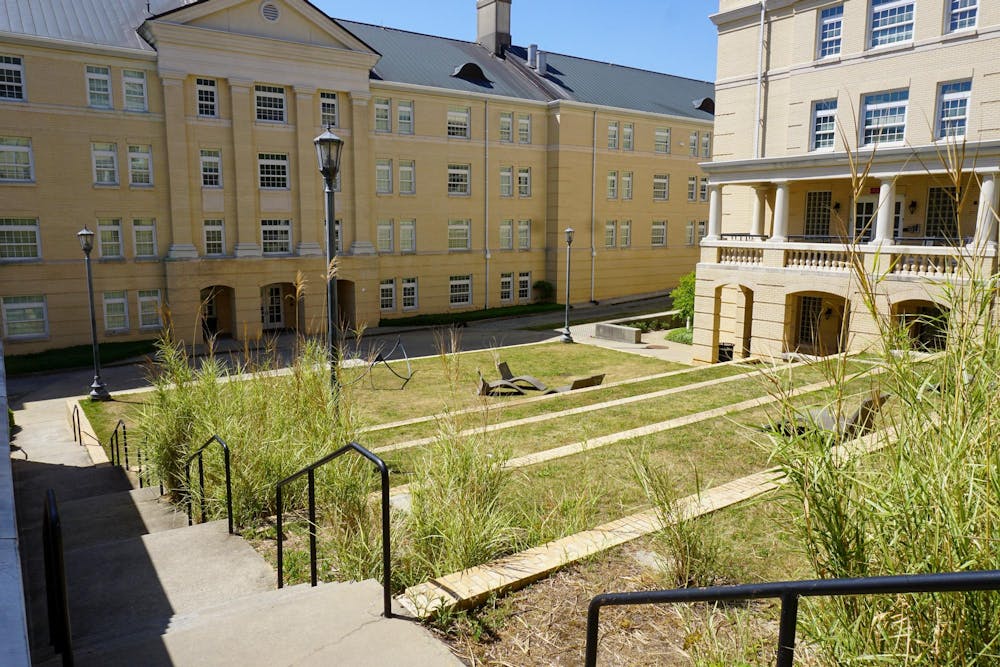
The USC campus looks its best on the website where the greenery is in full bloom, the grass is freshly cut and the sun beams on student's faces when they walk through the Horseshoe.
However, that image doesn’t reflect the reality of the whole campus. The website is the first thing that prospective students see when they apply, and the real-life campus should match, Botts said.
“Almost every day, I go on the USC website, and that's what I want to see when we look on our campus,” Botts said.
With new leadership in Student Government, there are new ideas on how to expand and maintain the green spaces found throughout campus.
While Student Government has its own ideas about expanding green spaces, they have also reached out to students to ask for their input. Student Government officials said they find it important to hear student perspectives due to their role as representatives and to assist when presenting ideas to administration.
“I feel like being on Student Government, our priorities and all our initiatives come from how to make student life better in general,” said vice chair for the senate sustainability committee Nicole Delorenzo. “Getting the feedback is how we're going to prioritize things.”
Botts said Student Government held a sustainability survey tabling event, where students were surveyed on various areas of sustainability at USC. Expanding green spaces at the Arnold School of Public Health, Davis Field and the Humanities area were standout points of the data collected, according to Botts.
While searching for new ideas to create a more sustainable campus, Student Government also hopes to maintain the already-present greenery. Bringing life back to wilted plants and collaborating with campus organizations is one way it hopes to achieve this initiative.
Filling empty planters and adding more seats to areas such as Gambrell Hall and the School of Journalism and Mass Communications rooftop patios are two ways Student Government aims to improve green spaces.
Senate Sustainability Chair Moorea Modica said she hopes to find volunteers in different clubs and organizations to plant more and keep these spaces green.
“I feel like we definitely want to have more partnerships across our committees on student senate with Student Government, administration and Sustainable Carolina and all the avenues within it,” Modica said. “Just to be able to have a big network where we're all pushing together because we're all going to work and do so much more together.”
Student Body President Cole Rotondo also mentioned utilizing collaborations to maintain green spaces. He said he wants to ensure USC groundskeepers have the resources they need for their work to keep grass cut and trees in bloom.
Rotondo said there is currently an opportunity to expand green spaces with the vacant Capital City Stadium. He said the space is in a flood zone, which makes building houses and retail establishments difficult but could be used as a park-type space that drains quickly during floods.
The university could place recreational fields there that it owns and operates, according to Rotondo. He said it is a space that is close to campus for students to enjoy, and it specifically could be beneficial for students living off campus.
“If you want to talk about improving the four-year experience, we're fixating on not only people at USC on campus,” Rotondo said. “We're talking about students who are off campus as well and giving them good resources that (are) walkable, and I think it could be a great opportunity for the university.”
The university could possibly co-own it with the city of Columbia, which could operate it during the summer when school is not in session, Rotondo said.
Rotondo said he also wants to engage in ideas that are unique to the traditional mindset of sustainability. This includes the idea to create a study space where plants consume the walls and flush the room with greenery.
Botts said that while Student Government wants to create a visual impact on USC’s sustainability, increasing awareness is another component of its overarching goals. During the sustainability survey tabling, Botts said there were some students unaware of sustainability on campus.
"Making students aware of, ‘OK, let's keep our campus beautiful. These are the next steps that you can take,’ so that's also in their mind," Botts said. "When they see a piece of trash or when they are thinking about recycling or composting, things like that, they know the direct impact that's having on our campus."
Rotondo said it’s important to think about sustainability while USC looks to expand and renovate. He said he’s been working with university architect Derek Gruner to ensure that sustainability and greenery are built into designs.
“As we expand our dorms and our current infrastructure, keeping greenery in mind is always a good thing,” Rotondo said. “Keeping sustainability in mind is always a good thing.”