
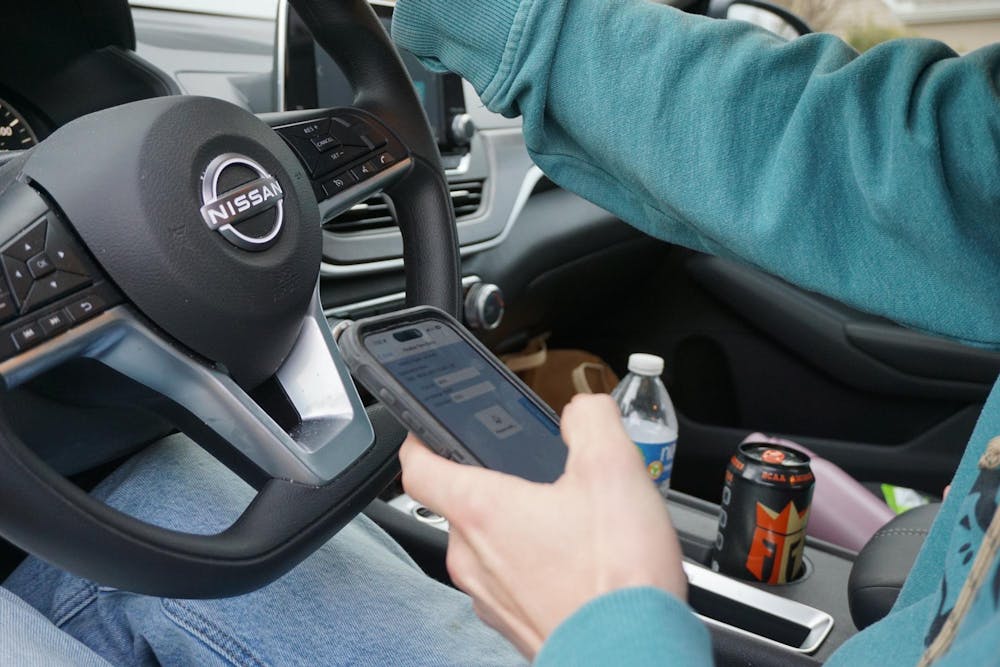
The South Carolina Legislature implemented the Hands-Free and Distracted Driving Act on Sept. 1, 2025. Due to the required 180-day grace period, the law has taken full effect as of Feb. 28, 2026.
The Hands-Free and Distracted Driving Act sets strict limitations on what drivers are allowed to do. While the original law only prohibited texting while driving, the new act limits drivers from holding or supporting a mobile device with any part of their body.
This includes using a mobile device to video call, read or compose texts, and watching any sort of media while driving. Exceptions to the law extend to drivers who are lawfully parked, interacting with their phone in hands-free mode, or are in a state of emergency.
The penalty for violating the law is a $100 fine on the first offense, followed by a $200 fine on the second offense within three years of one's first offense, along with two points on the driving record. However, further violations do not exceed the second offense's penalties.
South Carolina stresses the importance of hands-free driving and the consequences of being distracted on the road. The South Carolina Department of Public Safety hopes to lessen the amount of drivers who are visually, cognitively and manually inattentive to the road while interacting with a mobile device.
Second-year nursing student and Safe Ride driver Peyton Roth said she wasn't previously aware of the newly implemented law.
“I definitely think it’s going to make Safe Riding harder, which is how I make a quick couple hundred bucks," Roth said. "I probably won’t be able to do that as much or it’s going to be more inconvenient … I’ll have to pull over a lot more and then get on my phone.”
However, Roth said she believes the creation of the law was done with the goal of making the roads safer and hopes it will help.
Third-year biochemistry student and DoorDash driver Joseph Budiselich said he thinks the law will have an overall positive impact and that there is a lot of distracted driving in the city.
In regards to how the new law may affect his job, Budiselich was more focused on the flaws within the DoorDash app.
“Honestly the DoorDasher user interface is pretty unwelcoming," Budiselich said. "It’s permanently in dark mode … It’s harder to look at the directions, know what road you're on, and also their map interface that they have built in the app is a lot worse than Apple Maps.”
The root of the problems lies within the DoorDash interface and its limited optimization for driver safety, not the law, Budiselich said.
“I think if they're able to improve the apps … I can just glance over and look at what my next step is,” Budiselich said.
USC police officer Lt. Kyle Gilbert said he thinks this law will be very beneficial based on collision data from before and after the law was passed.
“As of today, looking at the fatal numbers involving collisions here in South Carolina, we started enforcing it with warning citations back on Sept. 1 of last year," Gilbert said. "The total number of fatals we had last year went down in South Carolina 9%. We are down 35 people this year compared to last year at this time.”
Gilbert said his job as law enforcement is to keep people safe, and any law that can help keep people safe is a good thing.
“Our ultimate goal is to keep all of our students, faculty and staff safe, whether it be traffic-wise or other things, keeping them safe on campus as a whole,” Gilbert said.